Two years ago, smart glasses were a punchline. Today Meta sells four kinds. At Connect 2026 it added a $349 pair with no camera, refreshed the $449 Ray-Ban Meta, kept the $799 Display model with a screen in the lens, and announced $1,299 VR Glasses that try to fit a headset into something you'd wear at a café. That's a real product line now, and it needs a buyer's guide.
Our verdict: Ray-Ban Meta Gen 3 is the pair to buy. For $449 you get a camera, open-ear audio and Meta AI in frames that look like ordinary Ray-Bans. The $349 Ray-Ban Meta Audio is the sleeper hit: lighter, longer-lasting, and without the camera that makes people nervous. The Display is for early adopters. The VR Glasses need real reviews before anyone should spend $1,299.
The Short Version
Best for most people: Ray-Ban Meta Gen 3, $449, available now.
Best without a camera: Ray-Ban Meta Audio, $349, ships October 13.
Best heads-up display: Meta Ray-Ban Display, $799.
Wait for reviews: Meta VR Glasses, $1,299.
The Lineup, Spec by Spec
| Spec | Ray-Ban Meta Audio | Ray-Ban Meta Gen 3 | Meta Ray-Ban Display | Meta VR Glasses |
|---|---|---|---|---|
| Price | $349 | $449 | $799 | $1,299 |
| Camera | None | 12MP photos, 3K video | Yes | — |
| Display | None | None | In-lens screen | Immersive, IMAX Enhanced |
| Controls | Voice, touch | Voice, touch, action button | Voice, Neural Band wristband | Virtual keyboard and touchpad |
| Battery | Up to 12 hrs + 48 hrs in case | Up to 9 hrs | Not compared | Not yet published |
| Weight | 43 g | Slimmer than Gen 2 | Heavier than Gen 3 | About 100 g |
| Styles | Clubmaster, Burbank | Aviator, Wayfarer, Zena; 27 combos | Limited | One design |
| Availability | Oct 13 | Now | Now | Spring 2027 |


Ray-Ban Meta Gen 3: Refined, Not Reinvented
Ray-Ban Meta is already the best-selling pair of AI glasses in the world, and Gen 3 wisely leaves the formula alone. The changes are practical: slimmer frames, an extra hour of battery (now up to nine), adjustable temple tips and a customizable action button that calls Meta AI instantly. The 12MP camera shoots 3K video, and six microphones handle calls in noisy places.
Style is where Gen 3 pulls ahead. With 27 frame and lens combinations across Aviator, Wayfarer and the new Zena cat-eye, it's the first pair that looks like it was designed for faces, not demos. The catch: Gen 2 owners get the same core experience and don't need to upgrade.
Ray-Ban Meta Audio: The Pair That Could Go Mainstream
Here's a product that could grow the whole category. Meta took the camera out, kept the speakers, microphones and Meta AI, and ended up with a 43-gram frame that lasts up to 12 hours, plus another 48 from the charging case. That's longer than any pair of earbuds, with nothing in your ears.
The missing camera is the point. The biggest social problem with smart glasses is the person across the table wondering if they're being recorded. Audio removes that worry, which makes these the first Meta glasses you can wear in an office, classroom, gym or doctor's office without a second thought. A $149.99 hearing-enhancement add-on is coming to the US later this year.
Meta Ray-Ban Display: Useful, but Not for Everyone Yet
At $799, the Display remains the only mainstream pair with a screen in the lens, controlled by a wristband that reads small finger movements. Glanceable directions, messages, live captions and a camera viewfinder are all genuinely useful. But the frames are heavier and more noticeable than Gen 3, and most people don't need a screen to get value from AI glasses. Buy it if you want the future now; skip it if you want something you'll wear every day.
Meta VR Glasses: Big Promise, Too Many Unknowns
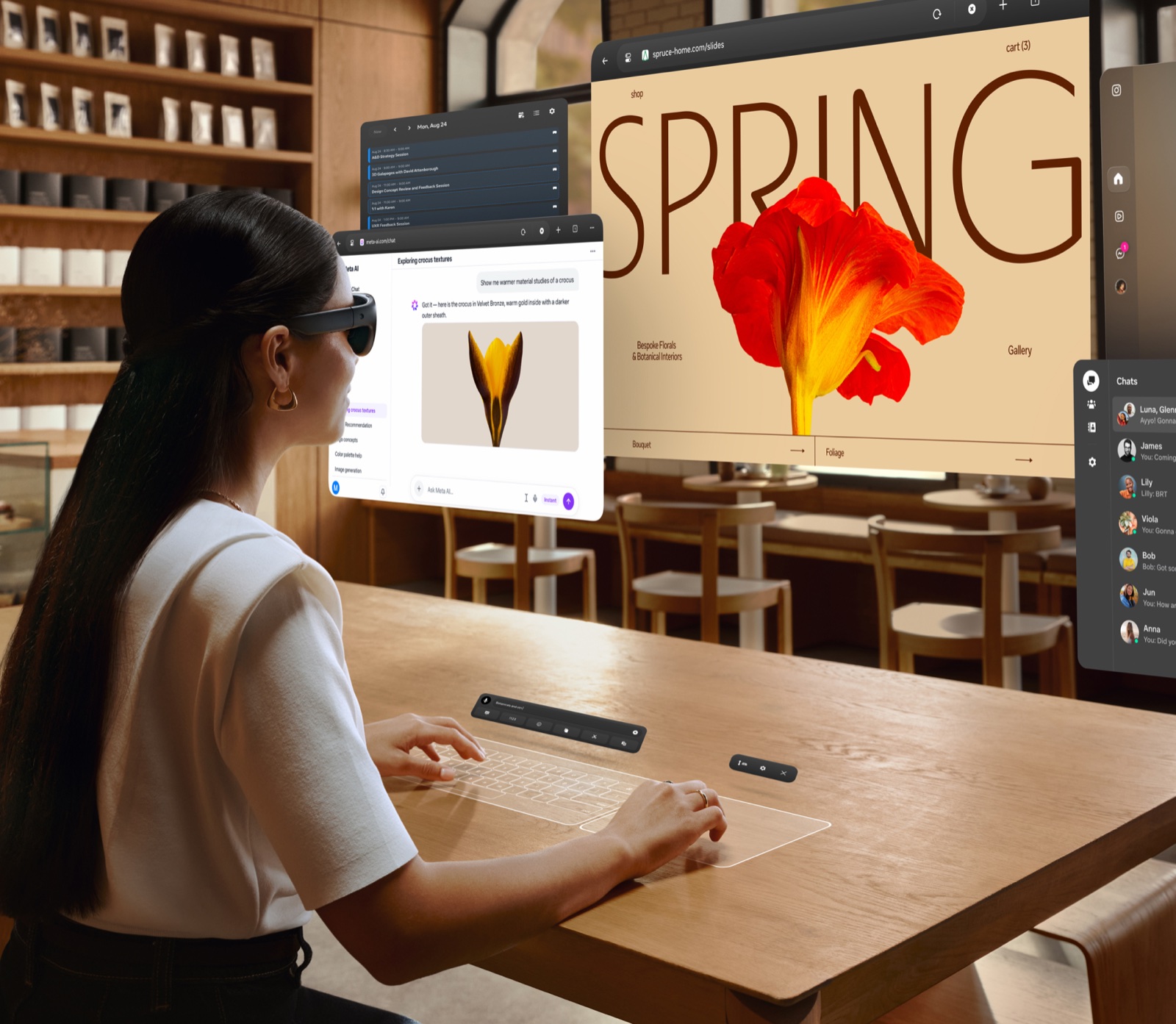
The $1,299 VR Glasses are Meta's attempt to shrink a Quest headset down to about 100 grams. The pitch is a private cinema and a multi-monitor workspace you can use on a plane or at a café, with IMAX Enhanced certification and a virtual keyboard and touchpad. If Meta pulls it off, this is a real laptop companion. Meta quotes up to three hours of video per charge, but it hasn't shown comfort over a full workday, and the glasses don't ship until spring 2027 (no month, no preorders yet). We compare them with XREAL, VITURE, Vision Pro and Galaxy XR in our VR and AR glasses guide.
The Software Matters More Than the Frames
The bigger Connect story may be Muse, Meta's personal AI agent, which is coming to the glasses. It adds hands-free activation, the ability to act on what you're looking at, longer conversations while tasks run in the background, and integrations with Walmart, Best Buy, Instacart, Expedia, Notion and GitHub. If it works as shown, it's the reason to own smart glasses in 2027. For how Meta's assistant compares with ChatGPT, Claude and Gemini, see our AI subscription verdict.
Which Pair Should You Buy?
- You want photos, video, music and AI: Ray-Ban Meta Gen 3.
- You want music, calls and AI without a camera: Ray-Ban Meta Audio.
- You want notifications and directions in your eye line: Meta Ray-Ban Display.
- You want a private big screen for travel: wait for Meta VR Glasses reviews.
- You own Gen 2: keep them.
The Verdict
Ray-Ban Meta Gen 3 is the best smart glasses for most people: the complete package in the frames people actually want to wear. Ray-Ban Meta Audio is the smartest new product Meta announced, and at $349 it's the easiest way to try AI glasses. The Display and VR Glasses point to where this is going, but neither is the right first pair.
FAQ
What did Meta announce at Connect 2026?
Ray-Ban Meta Gen 3 ($449, available now), the camera-free Ray-Ban Meta Audio ($349, ships October 13), Meta VR Glasses ($1,299), the Muse personal AI agent for its glasses, and a pocket device called Muse Charm. The Meta Ray-Ban Display ($799) remains in the lineup.
Which Meta glasses should I buy?
Ray-Ban Meta Gen 3 for most people, with a camera, audio and Meta AI for $449. Choose Ray-Ban Meta Audio at $349 if you don't want a camera. Consider the $799 Display only if you want an in-lens screen, and wait for reviews before buying the $1,299 VR Glasses, which ship in spring 2027.
How long does the Ray-Ban Meta Gen 3 battery last?
Up to nine hours, one more than Gen 2. Ray-Ban Meta Audio lasts up to 12 hours, with up to 48 more hours from its charging case.
Do Ray-Ban Meta Audio glasses have a camera?
No. They're Meta's first camera-free pair: speakers, microphones and Meta AI in 43-gram Clubmaster and Burbank frames, built for places where recording glasses aren't welcome.
Should I upgrade from Ray-Ban Meta Gen 2 to Gen 3?
Probably not. Gen 3 adds an hour of battery, slimmer frames, adjustable temple tips and an action button. Those are nice, but Gen 2 already has the same core camera, audio and Meta AI experience.